Pages
Pages - Menu
Pages - Menu
Kamis, 31 Juli 2014
Justin Bieber posts Instagram photo of Orlando Bloom crying... day after actor tried to punch him in Ibiza over Miranda Kerr 'romance'
Justin Bieber can't seem to let his Tuesday altercation with Orlando Bloom go.
The day after the Lord Of The Rings star tried to punch the Baby singer outside Cipriana restaurant in Ibiza, Spain, the 20-year-old star posted an image of his 37-year-old foe crying. Seemingly undecided if that was a good idea or not, Justin took the post down then about 20 minutes later place it back up.
This comes after Bieber posted a sexy snap of Bloom's estranged wife Miranda Kerr then took it down just hours after the almost-brawl. It is widely believed that the supermodel stepped out on her spouse in 2012 after a Victoria's Secret show with the musician, though the Australian beauty has denied it.
Scroll down for video
A low blow: Justin Bieber posted this image of a crying Orlando Bloom on Wednesday, just after an altercation with the actor outside Cipriana restaurant in Ibiza, Spain; it is widely believed the two don't get along because the 20-year-song got too close to the 37-year-old actor's wife Miranda Kerr
Hair we go again: Justin was keen to show off his facial hair on Wednesday, while making no reference to the incident with Bloom
Video footage shows the Pirates Of The Caribbean actor taking a swing at the Beauty And A Beat hitmaker.
Afterwards, Justin is seen throwing gang sings with his friend Khalil outside the venue.
He also shared a photo of himself topless and with a sparse smattering of facial hair on his upper lip. He captioned that one: 'Sunburnt and a mustache (sic)'.
He likes playing games on social media: Bieber taunted Bloom by posting this sexy photo of Kerr on his Instagram account
Calm after the storm: Justin Bieber was spotted larking around with friends in Ibiza on Tuesday evening, following an angry altercation with actor Orlando Bloom
One of his pals appeared to be mimicking a fight as he spoke to him, complete with clenched fists, suggesting they were talking about what had happened.
Bieber was dressed casually for the night in a white T-Shirt and two-tone baseball cap, while his black leather jacket was draped over his shoulder.
Footage, obtained exclusively by MailOnline, captured the moment Bloom threw a single punch at him when they met by chance at the eatery.
Hats off to him: The singer looked animated as he chatted with a group outside the resort's Cipriani restaurant
Drama: The 20-year-old draped a black leather jacket over his shoulder, while sporting a two-tone baseball cap
The incident was recorded by onlookers as Bieber crossed paths with the Pirates of the Caribbean star shortly after entering the venue with his entourage.
Bieber's security team promptly pulled the two apart before the incident spilled over into the street, with the singer reportedly calling the British star a 'b**ch.'
For years it has been reported that Bloom's estranged wife Miranda Kerr had been seen on a date with Bieber following a Victoria's Secret show in 2012.
Happier times: New footage, obtained exclusively by MailOnline, captured the moment actor Bloom threw a punch at the Baby crooner during a night out
Night out: Justin had tweeted cryptically just hours earlier: 'Keeping it positive' prior to Bloom's outburst
Witnesses: The Hollywood star appeared to make a beeline for the Canadian hitmaker before throwing a single punch
Representatives for Bloom and Bieber have refused to comment on the matter.
Bieber's outing comes on the same day that it was reported that tensions with his neighbours had become so fraught that he'd 'seriously considering' moving for the third time in four months, TMZ said.
He is rumoured to be eyeing up Candy Spelling's exclusive The Century complex in Century City, Los Angeles, where TV mogul Aaron Spelling's widow forked out $47million for two floors, a private pool and a spectacular view of the skyline back in 2010.
Reliving it: One of the star's pals appeared to mimic a fight with raised fits, suggesting he could have been talking about the earlier tussle
Bloom also has ties to Bieber's ex-girlfriend, Selena Gomez.
In April they were spotted partying together at the Forum in LA after taking in Chelsea Handler's Uganda Be Kidding Me show.
Both looked embarrassed as they were seen sitting on a sidewalk together in what appeared to be a distressed situation.
But according to TMZ, Selena insists she has 'nothing to do' with the altercation, and that they were actually with their 'respective groups of friends' when they were snapped alongside each other.
Kerr and Bloom announced their separation in October 2013 after three years of marriage, claiming they had split several months earlier.
Together they have a son, Flynn, born in 2011.
On Wednesday the Never Say Never singer got involved in another odd situation.
He was seen swimming off a yacht in Ibiza with Fast & Furious actress Michelle Rodriguez.
She is the ex-girlfriend of supermodel Cara Delevingne, who was seen spending time with Justin's off-again girlfriend Selena Gomez in Saint-Tropez on July 22, the actress' 22nd birthday.
Not addressing the situation: Kerr with son Flynn, who she had with Bloom in 2011
When things were calm: Mr and Mrs Bloom arm-in-arm at the Vanity Fair Oscar party in February 2013
We're starting to get confused: The Canadian (left) spent time with Michelle Rodriguez (right) on Wednesday; Michelle's ex Cara Delevingne has been seen with Justin's ex Selena Gomez
sourch:dailymail
Minggu, 20 Juli 2014
Labor registers huge swing of 18.6% in Queensland by-election
Australian Associated Press
theguardian.com, Sunday 20 July 2014
ALP celebrations begin in Brisbane electorate of Stafford as premier acknowledges voters not happy with government
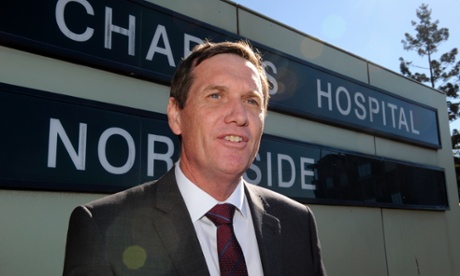
Dr Anthony Lynham secured 61.5% of the vote after preferences in Stafford. Photograph: Dan Peled/AAP
Queensland's Labor party is celebrating after winning the by-election in the Brisbane electorate of Stafford, with a huge swing of 18.6% per cent.
Labor's candidate, Anthony Lynham, is the party's ninth MP after securing 61.5% of the vote after preferences against the Liberal National party’s Bob Andersen.
Stafford residents voted on Saturday after the former LNP MP, Chris Davis, resigned in May.
A political analyst, Paul Williams, from Griffith University, said the LNP was always going to lose the by-election, but the huge swing against it was a blow.
The 18.6% swing exceeded the 17% swing suffered by the government during the Scott Driscoll-dominated Redcliffe by-election in February.
Williams had tipped a swing to Labor of up to a 12%.
“I don't think anyone in Queensland would have expected it would have exceeded Redcliffe so that's a huge surprise, mainly because there was no Scott Driscoll,” he said.
“There are a multitude of factors that work here and basically at every level the LNP has a problem.”
It was “natural selection” – Stafford residents historically vote for Labor – and the fact voters do not like LNP policies or the premier's style, he said.
“Only the rusted-on Liberal and National voters are the ones clinging to the party. Everyone else seems to be deserting it,” Mr Williams said.
He said the LNP's attempts to position Lynham as a blow-in had backfired.
“As [the premier, Campbell] Newman has found out, it's very hard to win a public relations battle with people who are of a notable profession,” he said.
It was difficult to say whether Stafford was representative of the state, but either way Newman would be taking note, Williams said.
“[The swing] is just so damn big no government can dismiss it and say it's just a by-election.”
However, he said it did not mean voters are happy with Labor.
“It's a begrudging second look at Labor ... They're going to have to do a lot more work,” he said.
“And of course the unknown in this equation is how will the Palmer United Party fare ... It does throw the whole game into uncertainty.”
Newman acknowledged that some Queenslanders were not happy with his government, and said the party needed to work hard to win back voters.
“This evening I say to those people, ‘We've heard you, we understand how you feel, and I pledge this evening to continue to work hard,’ ” he said on Saturday night.
“We will work very, very hard to take our message out to Queenslanders about the positive things we do want to happen in this state.”
He said “attacks” on the government by Davis did not do Andersen's campaign any favours.
Andersen, a psychologist, said despite the huge swing against the LNP, the party should reflect on what it had achieved.
“In a very short time we put together a credible campaign and we've done so fighting against not just the Labor party but union third party campaigns and also the damage that was done to us by the former member,” he said.
The Labor leader, Annastacia Palaszczuk, said the by-election outcome was a result of Newman not listening to voters.
“This is a premier who is taking Queensland backwards, and tonight Stafford has sent him a clear message,” she told supporters on Saturday night.
Lynham, a maxillofacial surgeon, said he was proud to be elected, and said the results sent a clear message to the Liberal National Party.
“It's a clear message that our community deserves to be heard – a clear message that it’s not OK to cut services and sack workers that we rely on every day,” he said
Labor registers huge swing of 18.6% in Queensland by-election | World news | theguardian.com
Coalition struggles in poll as voters question their trust in Tony Abbott
Daniel Hurst, political correspondent
theguardian.com, Monday 21 July 2014
Prime minister is rated trustworthy by just 35% of voters in latest Fairfax Nielsen poll, compared with 45% for Bill Shorten
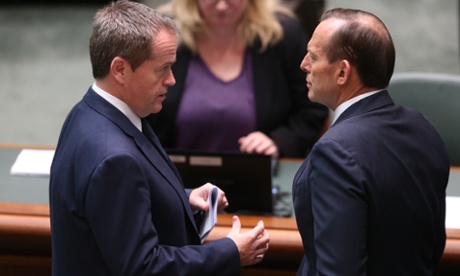
Opposition leader Bill Shorten maintains a five-point lead over Tony Abbott as preferred prime minister. Photograph: Mike Bowers for the Guardian
The Abbott government enters the winter parliamentary break lagging in the polls and with significant budget measures yet to be legislated.
The Fairfax Nielsen poll, published on Monday, shows Labor holding a two-party-preferred lead over the Coalition of 54% to 46% based on preference flows at the last election.
The poll of 1,400 voters from Thursday to Saturday indicated Labor’s primary support has risen three points since last month’s poll, to about 40%, the Coalition’s support has remained stable at 39%, the Greens’ has dropped one point to 12%, and the Palmer United party’s (PUP) support is at 5%.
Bill Shorten maintained a five-point lead over Tony Abbott as preferred prime minister (46% to 41%) as parliament entered its winter recess after a session that included the government securing passage of its bill to scrap the carbon price.
The government failed to repeal the mining tax after the Senate insisted on keeping spending measures, including the schoolkids bonus, and the Coalition is yet to legislate key budget measures such as the $7 GP fee, welfare changes and university deregulation.
The budget appears to have taken its toll on Joe Hockey’s standing as the treasurer. The poll showed Hockey and his Labor counterpart, Chris Bowen, were effectively even on the question of preferred treasurer. Hockey previously held a 17-point lead, Fairfax reported.
Just 35% of voters rated Abbott as trustworthy, compared with 45% for Shorten.
In other measures of the leaders' attributes, 54% believed Abbott had a clear vision for Australia's future while only 38% had the same view of Shorten. Voters were more likely to view Shorten as having a firm grasp of social policy but Abbott held a narrow lead on the question of foreign policy.
Overall satisfaction with Abbott's performance rose three points since the previous poll to 38% and dissatisfaction decreased four points to 56% (resulting in a net satisfaction rating of -18).
Voters' satisfaction with Shorten's performance dropped one point to 41% and dissatisfaction rose three points to 44% (net satisfaction of -3).
The poll has a stated maximum sampling error margin of 2.6%.
Jumat, 18 Juli 2014
Journalists will face jail over spy leaks under new security laws
theguardian.com, Wednesday 16 July 2014
George Brandis's new spying laws will include measure to criminalise media reporting of Snowden-style leaks
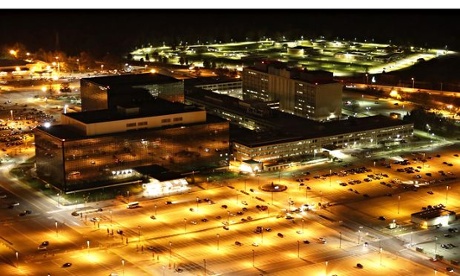
Edward Snowden's NSA leaks have prompted a crackdown by the Australian attorney general on the reporting of 'special intelligence operations'. Photograph: Trevor Paglen/REX

Australian journalists could face prosecution and jail for reporting Snowden-style revelations about certain spy operations, in an “outrageous” expansion of the government’s national security powers, leading criminal lawyers have warned.
A bill presented to parliament on Wednesday by the attorney general, George Brandis, would expand the powers of the Australian Security Intelligence Organisation (ASIO), including creation of a new offence punishable by five years in jail for “any person” who disclosed information relating to “special intelligence operations”.
The person would be liable for a 10-year term if the disclosure would “endanger the health or safety of any person or prejudice the effective conduct of a special intelligence operation”.
Special intelligence operations are a new type of operation in which intelligence officers receive immunity from liability or prosecution where they may need to engage in conduct that would be otherwise unlawful.
The bill also creates new offences that only apply to current and former intelligence operatives and contractors in a move which appeared to directly address the risk of documentary disclosures being made following revelations by the US National Security Agency whistle-blower Edward Snowden – whom Brandis has previously labelled a “traitor”.
On Thursday Brandis dismissed suggestions he was specifically going after journalists who reported information.
"No we're not and I think there has been a little bit of erroneous commentary on that provision," Brandis told the ABC.
"It's designed to plug a gap in the existing legislation. Under the existing legislation it's a criminal offence for an officer of a national security agency to disclose intelligence material to a third party, but it's not an offence for an officer to copy or wrongfully remove that material.
"In other words, communication with a third party is an element of the current offence but it seems to us that it should be wrong and it should be an offence to illicitly remove intelligence material from an agency. That's all that's about."
But the leading criminal barrister and Australian Lawyers Alliance spokesman Greg Barns said a separate provision in the “troubling” legislation could be used to prosecute and jail journalists who reported on information they received about special intelligence operations.
The offences relating to the unauthorised disclosure of information are outlined in section 35P of the national security legislation amendment bill, which was presented to the Senate on Wednesday and is set to face parliamentary debate after the winter recess.
The explanatory memorandum to the bill said the offence applied to “disclosures by any person, including participants in an SIO [special intelligence operation], other persons to whom information about an SIO has been communicated in an official capacity, and persons who are the recipients of an unauthorised disclosure of information, should they engage in any subsequent disclosure”.
Barns said: “I thought the Snowden clause [in the bill] was bad enough but this takes the Snowden clause and makes it a Snowden/Assange/Guardian/New York Times clause.”
“It’s an unprecedented clause which would capture the likes of Wikileaks, the Guardian, the New York Times, and any other media organisation that reports on such material.”
Barns, who has worked on terrorism cases and has also advised Wikileaks, said ASIO could secretly declare many future cases to be special intelligence operations. This would trigger the option to prosecute journalists who subsequently discover and report on aspects of those operations.
He said it would be easy for ASIO to declare special intelligence operations because it simply required the security director-general or deputy director-general to approve.
“Their own boss says, ‘I think we better call this a special intelligence operation, don’t you?’ ‘Yes, sir,’ close it down. The more you talk about it the more outrageous it becomes,” Barns said.
Barns said operations in which ASIO officers broke laws were the very ones that the community may regard as abuses of power. He argued Brandis wanted powers not available to governments in the UK and the US where citizens enjoyed greater protections for freedom of speech.
“In Australia we lack that fundamental human rights protection and therefore Brandis can get away with inserting a clause into a bill which you wouldn’t be able to do in the UK or in the US,” Barns said.
“It’s the sort of clause you’d expect to see in Russia or in China and in other authoritarian states but you don’t expect to see it in a democracy. I hope the Senate rejects it because it takes the law further than in jurisdictions which are similar to Australia.”
Leading criminal law barrister Shane Prince said the new offences relating to special operations were “quite draconian”.
“The five-year offence would seem to be able to apply even if the person had no idea about the special intelligence operation and they happened to release information which coincidentally was part of or related to the special intelligence operation,” he said.
“Add on to that the fact you probably in a trial wouldn’t be able to know what the special intelligence operation was about, would mean that you could have the situation where a person could be on trial for disclosing information which they say is related to a special intelligence operation, even if the person didn’t know that the information related to a special intelligence operation and they would never get to know in their trial.”
The Greens senator Scott Ludlam said the new offence could criminalise the actions of journalists. “I can’t see anything that conditions it or carves out any public interest disclosures. I can’t see anything that would protect journalists,” he said.
Electronic Frontiers Australia chief executive Jon Lawrence said the clause covering security personnel “appears to be a clear attempt to stamp down on whistle-blowers to avoid an Australian Ed Snowden.
“The fact that they’re making that illegal doesn’t necessarily stop a whistle-blower though I think in the general context of what is a pretty extreme crackdown on whistle-blowers generally.”
The amendments would explicitly bring private contractors under the definition of intelligence operatives to make them subject to prosecution, and include any person “performing functions or services for the organisations in accordance with a contract, agreement or other arrangement”.
The new penalties criminalise copying, transcribing, retaining or recording intelligence material in any way, and carry a maximum penalty of three years. Evidence of disclosure is not required for these penalties.
Brandis said this measure filled a gap in existing legislation whereby it was not unlawful for an officer of ASIO to illicitly copy or remove material from ASIO. He said it was already an offence for officers to disclose confidential information to a third party, punishable by up to two years in jail, and that penalty would increase to 10 years.
The president of the NSW Council for Civil Liberties, Stephen Blanks, said the penalties raised serious concerns.
“When things go awry total secrecy is not desirable. When something is seriously awry whistle-blowers play a vital role in the provision of good governance. The recent case relating to East Timor has thrown some light on this balance in Australia.”
The bill is the first element of the government’s planned national security reforms, with further changes set to target the risk posed by Australians who fight in Syria and Iraq and then return home.
Independent MP Andrew Wilkie, a former intelligence analyst, said on Wednesday it was important for intelligence officers to be able to make public interest disclosures. Australia’s whistle-blower legislation leaves a narrow window for disclosure of intelligence information.
“It must be accompanied by protection for intelligence officials who copy and disseminate material in the public interest,” Wilkie said.
Brandis referred the bill to the parliamentary joint committee on intelligence and security for a report by September, when MPs are set to debate the law.
Journalists will face jail over spy leaks under new security laws | World news | theguardian.com
Kamis, 17 Juli 2014
Fixing the federation: a tale of two Tonys
Photo: Tony Abbott's gyrations on relations between state and federal governments have been spectacular. (AAP: Alan Porritt)
On the matter of federation, Tony Abbott is waging a battle between the inner ideologue and the pragmatist, writes Mike Steketee.
According to Malcolm Turnbull, Tony Abbott told him when he went from supporting an emissions trading scheme to opposing one in the space of a few months in 2009: "Mate, mate, I know I'm a bit of a weathervane on this."
Not only on climate change. Just as spectacular have been his gyrations on relations between state and federal governments.
When the Prime Minister released the terms of reference three weeks ago for a White Paper – in other words, a statement of new government policy - into reform of the federation, they included this sentence: "Our federation is not, as some argue, a relic from the past, broken beyond repair and ill-suited to the times." Some have indeed argued something very similar.
Tony Abbott, or was it perhaps his doppelganger, wrote in his book Battlelines, published in 2009 before he became leader: "More than 50 years of increasing Commonwealth involvement in areas of government that were once exclusively the realm of the states means that the federation is broken and does need to be fixed."
True, he did not say then that the federation was beyond repair. And he had a proposal for fixing it: "The only credible way is to give the Commonwealth legal authority commensurate with its political responsibility." This, he wrote, was not centralism. But it looked an awful lot like it. As Annabel Crabb pointed out here two weeks ago, he even drew up a constitutional amendment to turn his idea into practice. It gave the Federal Government authority to make laws on "any other matters" not listed as Commonwealth powers in the Constitution, which covers all those that are the states' responsibilities.
Today's solution is the opposite: as the terms of reference put it, "rather than seeking ever greater centralisation of power in the national government as a way of dealing with increasing complexity, now is the time to strengthen the way our federal system works by being clear about who is responsible for what."
Five years ago, the only practical alternatives to sorting out responsibilities in areas where both levels of government were involved were, to quote Battlelines, "to accept the existing situation as the least worst outcome or to give the national government power it does not currently have to bring the states into line". Now, says the Prime Minister, the states and territories should be, as far as possible, "sovereign in their own sphere".
Abbott is not the first politician to wage a battle between the inner ideologue and the pragmatist. In 2009, he was venting his frustrations with dealing with Labor state governments during the Howard years. Now, with mostly Liberal governments around the country, he is reverting to the more natural conservative position of dispersing power rather than centralising it.
If he carries through with his intentions, it would mean the biggest change in how Australian democracy functions since the nation was founded 113 years ago.
One sign that he is serious is the $80 billion in cuts to health and education funding to the states over the next decade. The states can cop it and pare back their two largest spending programs - and in the case of health, the fastest growing - or they can find the money elsewhere, which means from their own revenue.
Abbott is putting weight on the states to take up the second option. One of the items in the White Paper's terms of reference is "how to address the issue of state governments raising insufficient revenues from their own sources to finance their spending responsibilities." As well, the White Paper "will be closely aligned" with the findings of the separate review of the tax system now underway and will draw on the recommendations of the Commission of Audit. The main option canvassed in the Audit Commission report is the states raising their own income taxes. Another is increasing the rate of the GST or extending its scope.
In theory, it makes sense for the states to raise more of their own revenue, so that they are more careful about how they spend it, rather than blaming Canberra every time they are short of money. The Audit Commission says Commonwealth funding of the states represents 40 per cent of state revenue, which is the biggest imbalance between spending and revenue of any comparable federation.
In practice, the result of the Abbott reforms is likely to mean hospital and school funding being squeezed even harder than they are today, while lower profile state programs such as housing and homelessness would run the risk of disappearing altogether.
The history of the Australian federation is clear. Ever since the states handed over their income taxing power to the Commonwealth in World War II, every offer to them to raise more of their own taxes has come to nought. The Fraser government legislated to enable the states to impose a surcharge on income tax or give a rebate. No state took up the offer. None of them wanted to be the first to jump. In any state approaching an election, both sides quickly feel compelled to rule out tax increases.
The states still have the power to impose income taxes but they show no more sign of taking it up now than they ever did. One argument is that if the Commonwealth cut its taxes to make room for the states, they would be more likely to act. Don't bet on it. Governments still would be looking over their shoulders at their counterparts in other states, and at their oppositions.
When the Howard government introduced the GST, it handed over all the revenue to the states, with the aim of ending the need for the states to take their begging bowls to Canberra. But what was supposed to be a growth tax has not kept pace with the overall economy, let alone fast expanding spending areas such as health. The states can do something about it: provided they all agree on an increase in the GST, then under current legislation Canberra will implement it. There is no sign of it happening. The changes have been mainly in the other direction, with states competing with each other to cut their payroll and other taxes.
Gough Whitlam wrote in his 1985 book The Whitlam Government:
The experience in Australia during the 1950s and 1960s was that any community service solely dependent on state government tended to deteriorate, while any service for which the federal government assumed a financial responsibility tended to prosper... Unless the national government becomes involved in a major function or costly service, that function or service will either not be financed fairly or not financed adequately or not financed at all.
Nothing has changed. Abbott's current proposal to fix the federation is a recipe for smaller government. That fits his ideological predisposition. Politics will determine whether the pragmatist takes over again down the line.
Mike Steketee is a freelance journalist. He was formerly a columnist and national affairs editor for The Australian. View his full profile here.
Fixing the federation: a tale of two Tonys - The Drum (Australian Broadcasting Corporation)
The Australian parliament must have the power to decide if we go to war
Scott Ludlam theguardian.com, Thursday 17 July 2014
The prospect of another military deployment in the Middle East is real. After the strategic failures in Iraq and Afghanistan, the executive cannot be trusted to make that decision alone
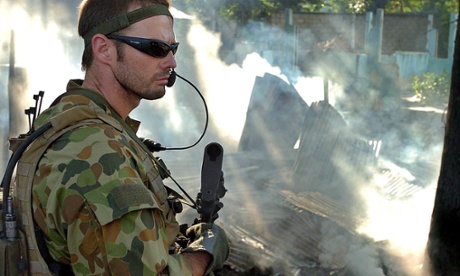
'Our current Defence Act does not allow for any level of transparent decision making.' Photograph: EPA
Australia is one of the few remaining democracies that can legally deploy its defence force into a conflict zone without recourse to the parliament. At the moment, that decision is reserved to the executive alone.
As kindred democracies around the world have enacted reforms to vest the so-called "war power" in elected parliaments, Australia has remained anchored to a pre-democratic tradition founded in hereditary monarchies and feudal states.
If this anachronism had served Australia well, it might be possible to mount an argument that "if it isn’t broken, it doesn’t need fixing”. If the horror unfolding in Iraq does not permanently put this view to rest, it is difficult to imagine what would.
On the basis of fabricated and wilfully misinterpreted intelligence, in 2003 then-prime minister John Howard followed the United States and United Kingdom into an illegal and open-ended war in Iraq.
Our parliament, and by extension the voting public of Australia, were cut out of the decision, despite the fact that hundreds of millions of people around the world organised and campaigned against the decision to go to war.
The decision by hardliners within the Bush administration to invade Iraq is now seen as one of the most grievous strategic disasters in modern history. The vast majority of the world’s people were right, and the executive authorities in the US, UK and Australia, were wrong.
No inquiry into the decision to go to war has ever been held in Australia - only a handful of piecemeal attempts to pin the blame on intelligence services and shift focus away from the actions of the Howard government.
At the time, Iraq was not threatening war. There was no allegiance between the secular Baathist regime that ruled Iraq and the fundamentalist Al Qaeda networks responsible for the 9/11 attacks. There were no weapons of mass destruction in Iraq, and hadn’t been since 1991.
Intelligence agencies within the US, UK and Australia understood these facts, but inflexible groupthink prevailed within the White House, Downing Street and the prime minister's office here in Australia.
Australia is entirely complicit in the violent, decade-long occupation that shattered Iraq’s social and economic structures, and ignited long-dormant sectarian tensions that now threaten to plunge the crippled country into full-blown civil war.
At the time of writing, Sunni fundamentalists considered too extreme to remain part of Al Qaeda have established a new caliphate in territory carved out of Syria and Iraq. The brittle institutions of Iraqi governance, bombed into existence by the United States, now threaten to collapse entirely.
If there is a strategic policy failure more complete than the catastrophic invasion of Iraq, it is difficult to recall it. This dismal outcome was predicted at the time by many of those who opposed the war, but the executive’s lock on the process means that the normal parliamentary processes of critique and accountability were bypassed. Somewhere between 100,000 and one million Iraqis have paid for this obscene oversight with their lives.
As the security environment in Iraq deteriorates, should Tony Abbott decide to compound the strategic incompetence of 2003 with a further deployment, the Australian parliament, and the Australian people, will be cut out of the decision again.
Concurrently with the Iraq deployment, Australia has also fought a long, costly, and ultimately futile war in Afghanistan. The heaviest cost was carried by the Afghan people: tens of thousands of civilians killed, maimed and traumatised as the US government’s saturation bombing campaign transitioned into a long, untenable occupation.
Forty-one Australian soldiers lost their lives in Afghanistan. Out of respect to them and their families, parliament pauses to acknowledge their sacrifice when news breaks of another death. No such respects are paid to those Afghans who also paid the ultimate price; no-one even appears to be keeping count.
It is no longer tenable that the decision to deploy into conflict zones should be left to the executive alone. Our current Defence Act does not allow for any level of transparent decision making, scrutiny and debate. This is an artefact of legislation, not the natural order of things.
Today I reintroduced the Defence Amendment (Parliamentary Approval of Overseas Service) Bill 2014 to ensure that the decision to deploy members of the Australian Defence Force be made not by the executive alone but by parliament as a whole. This means debate in both houses, followed by a vote.
It is the latest iteration of a bill introduced into the Senate in 1985. By 2015 it will mark its 30th year of languishing in plain sight while Liberal and Labor prime ministers alike reserve this power to themselves.
This bill would bring Australia into conformity with principles and practices utilised in other democracies including Denmark, Finland, Germany, Ireland, Slovakia, South Korea, Spain, Sweden, Switzerland and Turkey, where troop deployment is set down in constitutional or legislative provisions. Some form of parliamentary approval or consultation is also routinely undertaken in Austria, the Czech Republic, Italy, Japan, Luxembourg, the Netherlands and Norway.
Our ally, the US, has a similar provision that subjects the decision to go to war to a broader forum — section 8 of the US Constitution quite clearly says, "Congress shall have power to declare war". In the wake of the disaster in Iraq, the UK parliament now holds a de-facto war power, a new convention that prevented a rushed deployment into Syria earlier in 2014.
There are exemptions in this bill to avoid interfering with non-warlike overseas service in which Australian troops are engaged. There are also appropriate exemptions in the bill to provide for the practicalities of situations where parliament cannot immediately meet.
It is time that Australia joined its closest allies and like-minded democratic states by involving the parliament in the decision to deploy the ADF. The entwined tragedies of our recent military misadventures, and the threat that history may soon repeat, make passage of this bill more urgent than ever.
5 Years In!
Sebuah tulisan tentang Cepu
Cepu...
Perkenalan saya dengan kota ini terjadi di akhir bulan Mei 2014. Kebetulan ada semacam pendidikan dari tempat saya bekeja disana selama 5 minggu.
Cepu itu sebuah nama kecamatan di kabupaten blora, jawa tengah. Letaknya pas diperbatasan antara jawa tengah dan jawa timur. Cepu dan jawa timur dipisahkan sama sungai bengawan solo.
Cepu itu kota yang lumayan panas, trus ketika wilayah disekitarnya ujan cepu ini termasuk yang jarang ujan. Sebuah kecamatan kecil yang jauh dari keramaian kota macam jakarta n kota besar lainnya
Tapi untuk sebuah kecamatan, cepu ini termasuk ramai. Karna disini punya pusdiklat migas ,,,, dalam sebulan ada aja karyawan yang dikirim untuk pelatihan maupun sertifikasi disini. Disini ada juga tempat sekolahnya.
Persiapan buat ke cepu
5 minggu di cepu. Sudah ada daftar apa-apa aja yang harus kita bawa. Baju putih hitam dan baju olahraga yang wajib dibawa.
* 4 stell baju putih hitam
* 2 stel baju olahraga
* 3 stel baju bebas (tergantung suasana hati, kl pengen beda-beda penampilan, bawalah sebanyak yang anda bisa)
* alat mandi
* alat shalat
* obat-obatan (bila perlu)
* sunblock n pelembab . Keluhan pertama waktu dicepu itu kulit dan bibir kering.
Kalo buat barang2 laen yang riweh kl mau bawa dr rumah, mending beli di indomaret ato alfamart terdekat.
Dari jakarta ke cepu naik apa?
* Via kereta
Saya mencoba pake kereta waktu ke cepu. Ini kereta eksekutif. Per mei 2014 kemaren harga belinya di angka Rp 450.000. Ambil rute utara - jakarta - cirebon-semarang-cepu- surabaya. Kereta ini berangakt pukul 20.30 n sampe di cepu kira-kira pukul 04.00 pagi.
* Pesawat
Kalo mau naik pesawat bisa via semarang atau surabaya.tapu kemaren kebanyajan ambil rute yang jakarta - surabaya. Setelah itu lanjut naik travel ke cepu
Di cepu, kita bisa pakek transportasi apa aja?
Pertanyaan pertama waktu sampai di cepu,,,jadi selama disini kita nanti gimana ya? Naik apa kalo mau kemana-mana?
1. Jalan Kaki
Murah meriah n bikin sehat pulak. Cukup mengandalkan kaki, dan anda bisa sampai kemanapun. Kebetulan pas dicepu saya tinggal di wisma patra 1. Kalo ada waktu luang di malem hari n lagi pengen cari kulineran, biasana jalan kaki merupakan pilihan paling kece. Murah meriah, sehat, nikmatin udara malem, nikmatin bintang2 yang jarang keliatan kl kita ada di jakarta, n nambah temen...
2. Sepeda
Sewa sepeda di cepu : Rp 100.000 untuk 1 bulan. Kalo kemaren kita sewa di wisma patra 3 cp: bp.wiji. awalnya kita kehbisan sepeda, trus coba cari di sekitar pasar n pasar sepeda.tp sepeda sepeda yang ada disitu dijual semuaa, (baru maupun bekas).
Butuh banget g si sepeda? G butuh butuh banget juga si...sepeda biasanya dipake kalo pas kita pengen beli sesuatu tp pas sdr ato cm berdua ke indomaret dkk n males jalan kaki. Sepeda juga dipake pas kita ada waktu libur, trus pengen nikmatin cepu sambil sepedaan agak jauhan..misal keliling2 desa, bukit cinta, taman seribu lampu, bravo, dll
3. Becak
Contact person bp becak di cepu 081328336138.
Salah satu alat transportasi andalan di cepu itu becak. Kalo lagi pengen keliling cepu, trus males naik sepeda ato jalan kaki, bisa langsung contact bapak ini buat jemput. Becak dengan kayuhan itu buat kita nikmatin sebuah perjalanan,,,,kl mw cepet saia sarankan manggil ojek
4. Ojek
ini contact person ojek di cepu :085865380274.
Nah,,,,kalo pengen cepet, buru-buru, ato ketempet yang agak jauhan bisa sama abang-abang ojek,,,, Contact person ini, slain bs ngojek juga bs sewa mobil carry,,,,kalo misal pengen keluar kulineran bareng-bareng sama temen temen yang lain
5. Angkot
contact person bapak angkot di cepu: +6285290076297
Dulu angkot merupakan transportasi umum dicepu (menurut cerita bapak angkotnya). Tapi sekarang uda kurang laku kalo dia dijadiin transportasi umum. Jadi angkot di cepu ini lebih ke dicharterin. Cukup hubungi n janjian kapan dan dijemput dimana,,,,
Angkot biasanya kita pake kalo kita pengen kulineran bareng-bareng tapi yang g terlalu jauh,,,misal ke bojonegoro.
6.Elf ato mobil
Elf ato mobil biasanya kita pake kalo kita pengen travelling di sekitar cepu. Misal ke semarang, surabaya ato solo.
Di cepu, kita bisa kulineran dimana?
Biasanya disaat kita bosen tu ama makanan di wisma, pilihan utama langsunglah kulineran. Kalo pas malem2, kulinerannya di yang terjangkau pake kaki. Kalo pas sabtu ato minggu, kita kulineran pake angkot
1. Menthok goreng
Open: 1/2 5 sore.
Contact person menthok goreng cepu: 085726639551
Letaknya di pertigaan deket pusdiklat migas yang ada beringinnya itu. Tadinya kita g tertarik karena tempetnya kecil. Tapi setelah ada 1 kelompok yang bilang enak, berita langsung cepet menyebar. Kita sampe 2 kali pesen buat 1 kelas. Tips: jangan lupa pesen dulu via cp diatas, biar g k ehabisan stock ;p
2. Kampoeng atjeh
Contact person mie aceh cepu: 081287741592
Letaknya ada di deket sasonno suko di nglajo. Tempetnya kaya rumah dengan halaman, trus ada payung2 tendanya gitu. Pernah liat warungnya, tp belum pernah makan langsung disana. Karna kebetulan kemaren kita delivery order ke wisma. Menunya ada nasi goreng, ada mie aceh. Mie aceh seafoodnya mantep!
3. Lesehan sapring
Contact person lesehan sapring cepu: 085755520555
Lesehan sapring ada di bojonegoro. Setelah rs padangan. Kalo dri wisma patra I dicepu skitar 20 menit naik angkot. Menunya seafood2 gitu. Yabg favorit disana menurut kita itu ikan bakar pedasnya sama ikan lombok ijo nya. Oya,,,tempetnya lesehan gitu, sampingnya sawah2. Kalo mau makan buat satu kelas juga tempetnya cukup
4. Sate ayu
Sate ayu itu yang dijual sate kambing. Salah satu warung sate kambing yang terkenal di sini. Ada menu sate kambing tanpa lemak ato mw yang pake lemak. Harganya skitar 30-35 ribu. Dan kalo kesini, cobain es jeruknya juga,,,es jeruknya itu es jeruk nipis, jadi kerasa beda.
5. Bakso goyang lidah, dan sekitarnya
Malem-malem bosen sama makanan diwisma n pengen keluar cari bakso. Bisa jalan dari arah wisma patra I ke arah pasar, setelah pertigaan pusdiklat masih lurus ke arah pasar. Ntar dikiri jalan bakalan nemu beberapa warung bakso. Ada warung mie ayam bakso dengan gerobak ijo (ini yg enk mie ayamnya-baca:mie ayam jawa. Kalo tmn saia yg dr jakarta, agak krg suka sm mie ini).
Maju dikit lagi kearah pasar, ntr dikiri jalan ada bakso goyang lidah. Sejauh ini yang favorit n bisa dijangkau dengan jalan kaki dari wisma ya bakso ini.
6. Sate ayam blora
Letaknya ada di depan pusdiklat migas, tepatnya didepan atm bni nya. Kita cobain makan disini pas malem2. Sate blora disajikan berbeda dengan sate biasanya. Nanti kita bakalan dikasi bumbunya dulu 1 piring, trus baru satenya disajikan terpisah.
Tempet makannya cukup buat 10-15 orang.
Sebenernya masih banyak kuliner makanan yang wajib dicoba dicepu, tapi karna keterbatasan transport, waktu dan tentu saja dana,,,,,baru makanan2 diatas yang sempet dicobain. Oiyaa,,,dideket wp 1 juga ada sup ayam pak min (sup ayam kampung gitu) ini juga recomended. Trus katanya dideket nglajo juga ada lontong kikil. Sayang belum sempet cobain. Kalo malem, pengen nongkrong n pengen ngangkring bisa ke perbatasan jateng jatim..disitu ada angkringan dengan lesehan lumayan luas n rame jugak kalo malem.
Di cepu, kita bisa wisata kemana?
Kalo menurut buku panduan wisata, kalo dicepu tempet yang bisa dikunjungi kaya kereta api lama, taman seribu lampu, sentra kerajinan kayu jati, wonocolo... tapi kali ini saya lebih tertarik bahas wisata sekitar cepu (karna yang dicepu sendiri juga malah blm sempet sii,,,kecuali sepedaan sampe taman seribu lampu ;p)
1. Tawangmangu-sarangan (surakarta)
* Rute: cepu-tawangmangu-sarangan-cepu
* Waktu: 05.00 - 21.00
* Waktu tempuh:
Cepu-tawangmangu : krg lebih 4 jam
Tawangmangu-sarangan; krg lbh 1 jam
Sarangan-cepu: kurang lebih 3 jam
* Transportasi : mobil / elf
* Kuliner : Sate kelinci
* Wisata : air terjun, tracking di hutan (jalannya uda bagus), udara dingin pegunungan, pemandangan danau, keliling danau pake speedboat
* Tarif : Rp 150.000 - transportasi, makan 3x, tiket masuk wisata (not include naik speedboat Rp50.000 1x putaran)
Oleh-oleh: kerajinan yang dijual di tempet wisata, makanan kecil (kletikan), baju (disepanjang sarangan), sayur n buah2an
2. Semarang - bandungan
* Rute : cepu-purwodadi-semarang-bandungan-semarang (via tol semarang)
* Waktu: 03.00 - 00.00
* Waktu tempuh:
Cepu - semarang via purwodadi krg lbh 5 jam (sebenernya menurut mbah google map cuma 3 jam, tapi karna jalanan purwodadi itu rusak parah, ada buka tutup perbaikan jalan jadinya perjalanan agak terhambat)
* transportasi: mobil / elf / kereta (cepu-semarang berangkat jam 4.30 an)
* Kuliner: wedang ronde, bandeng juwana, lumpia semarang
* Wisata
- Candi Gedong songo: candi yang terletak di perbukitan di bandungan, udara dingin, melihat candi, naik kuda keliling candi gedong songo
- Sidomukti: pemandangan pegunungan yang spektakuler, udara dingin, wahana outbond n bermain atv
- Lawang sewu: wisata horor, cobain sensasi keliling lawang sewu n abadiinbukti kalo kalian uda ke semarang dengan foto berlatarkan lawang sewu (spot kece: foto dari bunderan didepan lawang sewu)
- Wisata religi : mau foto2 berlatarkan tempat ibadah yang keren... wajib berkunjung ke masjid agung jawa tengah, gereja bledug yang ada di kota tua n klenteng Sam Po Kong
Oleh-oleh: Lumpia, bandeng Juwana
Kemaren cuman sempet ke candi gedong songo n lawang sewu karna waktu habis di perjalanan (akibat jalanan purwodadi yang rusak parah).
3. Surabaya - madura
* Rute:
1. Cepu - lamongan - surabaya - madura - surabaya - lamongan - cepu
2. Cepu - lamongan - surabaya - madura - surabaya - madiun - cepu
Waktu: 06.00 - 21.00
Waktu tempuh: cepu - surabaya 3 jam
Transportasi: mobil (jalan mulus)
Kuliner: Soto Lamongan (di Lamongan), bebek Sinjay (di madura), rujak cingur (surabaya)
Wisata: Jembatan suramadu, Mall di surabaya, aneka museum di surabaya
Oleh-oleh : almond crispy wisata rasa di sby (dkt mall tunjungan), sambel bu rudy, kaos cak cuk
Yang paling diinget dari cepu
* tempat yang lumayan panas
* tempat yang seru karna ada temen2 yang super seru n kece
* tempat yang ngebuat kita bisa jalan2 sampe ke kota lain
* tempat yang asyik buat joging pagi/ sore ... sepi, banyak pohon n sawah
* Tempet nongkrong yang rame ada di seputaran taman seribu lampu (banyak jualan makanan dll)
* Bravo: tempat belanja terbesar di cepu... buat belanja bulanan, ada alat2 tulis n mini toko buku, ada aneka makanan n semacam timezone gitu
* ada suatu suku yang indah pengen banget kesana buat ngeliat suku ini mumpung ada dicepu, tp belum kesampaian-suku samin
* kalo kata salah satu pengajar, di cepu ini ada penyakit khasnyaa,,,semacam kaya digigit tomcat gitu hasilnya.tapi itu bukan karna binatang smcm serangga, tapi karna bakteri (kemungkinan dari air..begitu si kata beliaunya)
* oleh-oleh khas dari cepu itu ledre, egg roll, kalo yang suka hiasan rumah tangga.. ada sentra kayu jati juga disini
Demikian sekilas info dari cepu... semoga bermanfaat ;)
By
Indah kusumastuti
Ditulis waktu nungguin pesawat jog-jekardah, dibaca dimana saja
Rabu, 16 Juli 2014
Senate deadlock leaves Government facing $300 billion budget hole
By political correspondent Emma Griffiths
Video: Budget blocks could create serious risk, economist warns (7.30)
Photo: Many budget savings proposals by the Government have been blocked in the Senate. (AAP)
Related Story: Hockey issues cuts threat amid budget deadlock
One of Australia's foremost budget experts says hundreds of billions of dollars in spending will be added to the nation's books if key budget measures do not pass through the Senate.
Chris Richardson, from Deloitte Access Economics, has told ABC TV's 7.30 program the Senate plan to block cuts and new fees from the Abbott Government's first budget will cost $300 billion over the next decade.
"Essentially, the Senate is not just blocking the budget for the next handful of years, but blocking the budget for the next decade," he told 7.30.
"And it says deficits as far as the eye can see unless there is some breakthrough in political processes.
"Across the next 10 years, and when you add in the interest bill as well, you're talking about $300 billion that the Senate is implying it will impose."
Mr Richardson says the budget situation has "gone backwards" already.
"The budget is in a lot of trouble," he said.
"What's happening in the Senate right now is bigger than people realise. The budget was big news with the savings it was making.
"In fact, the Senate looks like it's blocking enough things that the savings the Government was going to make across the four years, they've completely disappeared, and more."
In its May 13 budget, the Government announced billions of dollars in cuts, including to family tax benefits, health and education, and a $7 fee on GP visits.
Many of the measures are facing defeat in the Senate, with Labor, the Greens and the Palmer United Party saying they will oppose them.
One of the most significant budget measures was the reinstatement of a biannual increase to the fuel excise, which would have added $2.2 billion over four years to the Government's coffers.
But that measure has been killed off by the withdrawal of any support from the Greens, who judged it was pointless to negotiate with the Government.
Mr Richardson says that decision "surprised" him.
"I'm not clear you'd be calling them the Greens at the moment," he said.
"They sound a bit more like the Australian Motorists Party in terms of their response."
Hockey warns of more cuts if budget negotiation fails
Earlier on Wednesday, Treasurer Joe Hockey warned he is prepared to bypass Parliament and force through new spending cuts if Labor and the Greens do not come to the table on budget saving measures.
"I say to the Labor Party and to the Greens - if your instinct is to say 'no' immediately and to stick with that, you are dealing yourself out of having influence on public policy," he told ABC radio's AM program.
"Because if the immediate reaction is 'no', with no opportunity [for] open discussions in relation to matters, then there are other alternatives that we can take.
"We are open to discussions - as any reasonable Government would be - but we are not going to step away from the fact that the budget needs to be repaired."
Labor says it is willing to negotiate with the Government, but points out that the Treasurer and Finance Minister have both previously ruled out making changes.
"Today he's talking about alternatives, [but] we've been told there's no alternatives," shadow treasurer Chris Bowen told Radio National.
"So if the Treasurer wants to put up alternatives, let's get rid of the bluff and bluster and the beating of the chest with which he specialises, and get down and tell us what the alternatives are."
Tony Abbott backs away from new election speculation
Matthew Knott Communications and education correspondent
July 11, 2014
Prime Minister Tony Abbott has flagged the possibility of an election within 12 months if the chaotic scenes of this week's Senate negotiations over the carbon tax repeal continue.
After telling radio 2GB on Friday morning that it might be time for a poll if the government's ''difficulty'' continued for six to 12 months, Mr Abbott later told reporters at a media conference that his administration was there to govern, not call another election.
Prime Minister Tony Abbott says he is confident that the carbon tax will be repealed and his budget measures will get through despite chaos in the Senate yesterday. Photo: Ken Irwin
Mr Abbott said on radio that despite a week of "argy bargy", he was confident that the Senate would repeal the carbon and mining taxes and pass the bulk of his government's budget measures.
The Prime Minister's comments came as crossbench senators David Leyonhjelm and Nick Xenophon blamed Palmer United Party leader Clive Palmer, rather than the government, for the fact that the carbon tax was not repealed this week.
On Thursday Mr Palmer accused the government of attempting to ''double-cross'' him over the wording of an amendment forcing companies to pay large fines if they fail to pass on savings from the carbon tax repeal to customers.
PUP Senator Jacqui Lambie called for Coalition Senate leader Eric Abetz to resign, labelling him a ''disgrace''.
By contrast, the Prime Minister and other senior ministers have been careful not to attack Mr Palmer and his party, with Mr Abetz saying the repeal bill failed because of a ''technical difficulty''.
''One or two days of argy bargy certainly doesn't make for a political stalemate,'' Mr Abbott told 2GB radio on Friday. ''I think it would be a mistake to see the whole of the life of this new Senate being like the past few days.
''Let's never forget that Mr Palmer and his senators were elected on a clear platform of abolishing the carbon tax, abolishing the mining tax – they essentially have the same centre right platform as the government.
''I'm confident that for all the sound and fury, for all the colour and movement in the Senate we will get the bulk of our budget savings through and that once everyone huffs and puffs we will get the carbon and mining taxes repealed.''
Asked if his government would consider calling a double dissolution election, Mr Abbott said: ''If we had six to 12 months of difficulty maybe yes it would be time to start thinking along those lines.''
Opposition Leader Bill Shorten on Friday accused the government of rushing its carbon tax repeal and causing confusion in the business community.
Mr Shorten said business leaders had told him they are concerned that any company using synthetic greenhouse gasses in their supply chain would be drawn into the penalty regime.
''Does anyone seriously think that the Abbott government gave this more than a cursory glance when they were so desperate to announce a win yesterday?'' he told ABC radio.
''This week's farce I’d put squarely at the feet of the government because they're too arrogant to be able to ever admit they have to negotiate or work out something that isn't 100 per cent want Tony Abbott wants.''
PUP says it will repeal the carbon tax only if the government accepts an amendment that would require companies that fail to pass on savings within the first year of the repeal to pay a penalty of 250 per cent of the savings to the Commonwealth.
Although PUP and the government have insisted that the amendment only applies to power and gas companies, the business sector is concerned that it extends far further than this and would place huge compliance costs on industry.
The PUP amendment refers to ''an individual, a body corporate, a body politics, a partnership, any other incorporated association or body of entities, a trust or any party or entity which can or does buy or sell electricity or gas''.
Australian Industry Group chief executive Innes Willox said: ''Amendments that drag in the broader business community would be unworkable and cause regulatory mayhem, particularly as so many businesses have absorbed the carbon price and not passed it on to their customers.''
Liberal Democrat senator David Leyonhjelm said he would vote against the PUP's amendment, describing it as an ''absurd regime of compliance''.
''The ACCC already has enough power without any amendments from PUP – nothing else is required,'' he told Fairfax Media on Friday.
Asked about the Senate chaos on Friday, Mr Leyonhjelm said: ''This is all Clive Palmer's doing.'' He defended the performance of Coalition Senate leader Eric Abetz.
"We never saw the amendment until five minutes before we were asked to vote on it; I hadn't even read it. Luckily it was withdrawn," Senator Leyonhjelm said.
Family First senator Bob Day said he had concern about the ''big and ugly penalties'' for companies that do not pass on carbon tax savings, but had not decided how he would vote on the amendment.
If senators Day and Leyonhjelm vote against the amendment, the government would need the support of senators Nick Xenophon and John Madigan.
Mr Xenophon said he supported the PUP amendment.
''If the government can live with it, I can live with it,'' he said. ''It won't cause regulatory mayhem if companies are passing on the savings.''
Mr Xenophon said he did not approve of the PUP's tactics and said he saw no evidence the government had double-crossed Mr Palmer.
Poll: Who is to blame for the Senate's surprise decision to block the government's legislation to repeal the carbon tax?
Clive Palmer and the PUP 26%
- Eric Abetz and the government 70%
- Other 4%
Tony Abbott dismisses Senate 'argy-bargy', backs away from new election speculation
Leashing the PUPs in the Senate
By Anne Twomey Tuesday 15 Jul 2014
Photo: The Palmer United Party will find they are going to be heavily reliant on the advice of the clerks. (AAP: Alan Porritt)
It is a big call for any new parliamentarian to back their constitutional knowledge over that of a professional who has served the Senate with distinction for decades, writes Anne Twomey.
Clive Palmer's attack on the Clerk of the Senate for giving advice upon his proposed amendments to the carbon tax repeal bill appears to show a lack of understanding of the Constitution and the role of the Parliament under it.
Last week, the Clerk of the Senate, Rosemary Laing, apparently advised the Palmer United Party that its amendment to the carbon tax repeal bill ought to be initiated in the House of Representatives, rather than the Senate, because it might be regarded as imposing a tax. This was to comply with rules set out in the Constitution.
Clive Palmer reportedly responded by saying she should "get out of that job" if she was not prepared to act on his instructions. Yet it is an essential part of the clerk's job to advise senators upon compliance with the Constitution and the procedural rules of the Senate, rather than simply taking instructions.
The Constitution establishes the institutions of government, such as the Parliament and the courts, confers powers upon them, and imposes limits on those powers. In most cases those limits can be enforced by the courts if someone brings a constitutional challenge. In some cases, however, the Constitution imposes the responsibility upon key actors, such as parliamentarians or ministers, to respect and apply the rules of the Constitution.
When it comes to the powers of the Senate in relation to money bills, there is a very delicate balance between the role of the courts and the role of the Houses in applying and enforcing the rules.
Section 53 of the Constitution sets out most of these rules. It says that bills imposing taxation shall not originate in the Senate. They must first be passed in the House of Representatives. This is because of the principle that the power of the purse lies in the hands of the representatives of the people in the Lower House. For the same reason, section 53 also says that the Senate may not amend any bill so as to increase any proposed charge or burden on the people.
Difficult questions sometimes arise as to whether a legal requirement that someone pay an amount to the government is really a tax or a penalty. Section 53 says that a bill is not to be regarded as imposing taxation if it just imposes a pecuniary penalty or a fine. Mr Palmer may argue that this is all his party's amendment was proposing to do - to impose a penalty. However, there is an enormous amount of complex law on the question of whether an exaction of money amounts to a tax or a penalty, so one needs to be very cautious in this area.
So far, the High Court has regarded section 53 as 'non-justiciable'. This means that it will not enforce the requirements of section 53. Rather, it is the responsibility of the members of the Houses of Parliament to abide by these rules.
That does not mean that politicians can do what they want because the courts will not enforce the rules. On the contrary, it means that politicians are under a very solemn constitutional obligation to comply with these rules.
Members and senators rely on the independent advice of the clerks to ensure that they are complying with the Constitution and meeting their constitutional obligations. The clerks have long experience in the intricacies of money bills and their advice is traditionally given great respect. It is a big call for any new parliamentarian to back his or her constitutional knowledge and parliamentary experience over that of a professional who has served the Senate with distinction for decades.
There are also other good reasons to be cautious. First, it may be that if parliamentarians were to start flouting section 53 of the Constitution, the High Court might change its mind and seek to enforce its provisions.
More importantly, the High Court has held that it will enforce section 55 of the Constitution. This provision states that laws imposing taxation shall deal only with the imposition of taxation and "any provision therein dealing with any other matter shall be of no effect". The consequence of this provision is that if the Palmer United Party inserted into the bill a provision that imposed taxation, it could torpedo the repeal of the carbon tax. Hence the need for caution and to listen to wise and experienced heads.
The senators of the Palmer United Party will find, in time, that in order to achieve anything in the Senate, they are going to be heavily reliant on the guidance and advice of the clerks and other officials of the Senate. Rather than railing against it, a better approach would be to respect it and to ask what alternatives would best achieve their goals. A constructive approach is more likely to succeed than a destructive one.
Anne Twomey is a Professor of Constitutional Law at the University of Sydney and in the 1990s was secretary of the Senate Legal and Constitutional Committee. View her full profile here.
Leashing the PUPs in the Senate - The Drum (Australian Broadcasting Corporation)
Selasa, 15 Juli 2014
How Do You Do It All?
Though I haven't achieved even a modicum of the success she has, I am often asked by my childless friends how in the world do I balance being a mother of three with the pursuit of such a crazy, difficult and sometimes all-consuming acting/writing career? Her answer is EXACTLY how I feel:
Nail on head! I literally cannot add another word to that as it perfectly expresses how I feel about balancing the two and why I'm willing to struggle to live in this ridiculously expensive city in order to pursue a career that truly fulfills me in a way that no other job has.
Even if you're not a parent, there are still some wonderful gems in this speech. You can watch the full video here or read the transcript courtesy of Dartmouth below.
"President Hanlon, faculty, staff, honored guests, parents, students, families and friends—good morning and congratulations to the Dartmouth graduating class of 2014!


Dr Anthony Lynham secured 61.5% of the vote after preferences in Stafford. Photograph: Dan Peled/AAP
Opposition leader Bill Shorten maintains a five-point lead over Tony Abbott as preferred prime minister. Photograph: Mike Bowers for the Guardian
Edward Snowden's NSA leaks have prompted a crackdown by the Australian attorney general on the reporting of 'special intelligence operations'. Photograph: Trevor Paglen/REX
'Our current Defence Act does not allow for any level of transparent decision making.' Photograph: EPA


Photo: Many budget savings proposals by the Government have been blocked in the Senate. (AAP)